IAM – Goal Clouds
Year
2021
Role
UX Designer
Timeline
8 weeks
Methods
Secondary Research, Interview, Task/User Flow, Blueprints, Sketching, Prototype. Usability Testing
Tools
Figma, Miro
Project Overview
In the post-pandemic, many individuals are struggling to recover their mental health with IAM because everything goes online. We designed a platform to help IAM clients to manage and track their process in order to achieve their goals step by step. Besides, IAM staff can manage their clients' projects on their end through this platform in the meantime.
My Role
I worked on this whole project as UX designer with my peers at Humber College. In this project, I participated and conducted every phase of this project with diverse deliverables including interview, usability testing and visual designs.
Problem Statement
"Since Toronto started locking down, many individuals are struggling of holding up their mental health because they lost social connection with their families and friends by gathering in person."
Design Process
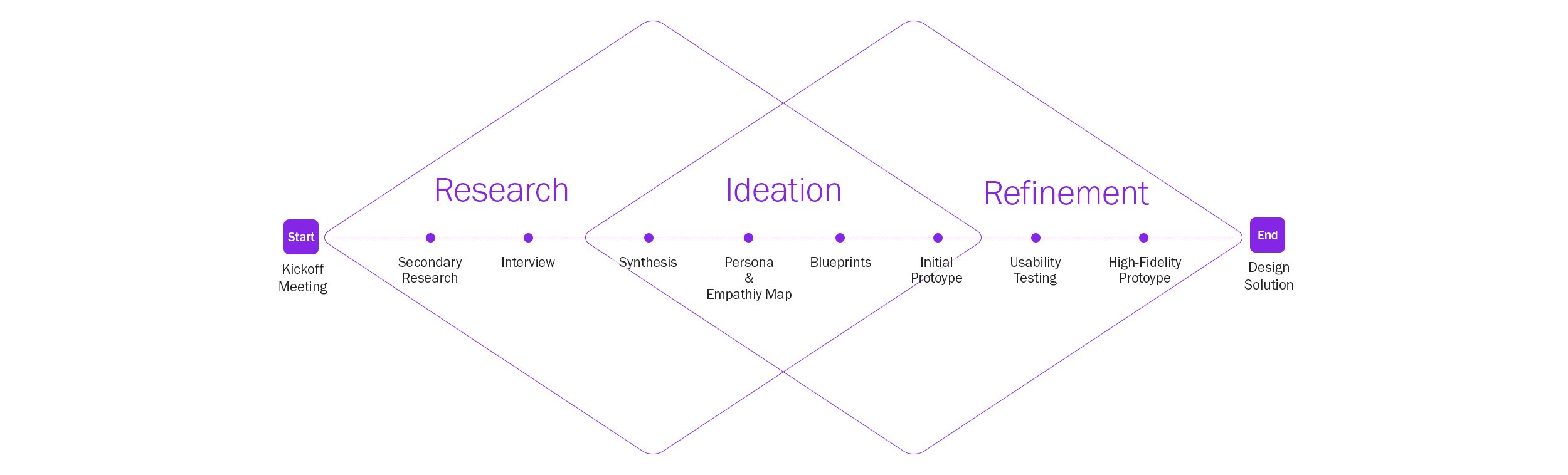
Interview
To understand individuals' current journeys in the post-pandemic, we looked for three young individuals in their 20s who currently live in Toronto. Our team then generated a semi-structured discussion guide for their interview. The discussion guide focused on their experience of dealing with their mental health during the pandemic.
The intent of the interviews were to determine the following:
➕ The impact on COVID-19;
➕ Their stories of experiencing isolation and loneliness;
➕ What online methods/resources do they use for recovery;
➕ What kinds of activities would they be interested to engage online; and
Besides, we prepared a 30 mins semi-structured discussion for IAM front line staff to understand their current work routine and difficulties with their clients.
Key Findings
Through analysis of collected codes and data, we concluded main insights from two kinds of stakeholders:
Young Individuals:
➕ Better Education with goals and guidance: Young people need more education and awareness about mental health and solutions on how to treat them, including accessible resources that are meant to guide them to navigate through the process.
➕ Social Face to Face Interactions: Although there are tons of online platforms that clients can access, friendly in-person human interactions seem to be the most helpful and desirable form of interaction for clients.
IAM Front Line Staff:
➕ Need for Customization: The clients are different with different needs and situations, one method might not fit all of them. Therefore, our solution should let the clients choose and personalize the programs, activities and services based on their needs.
➕ Pandemic Effects on Resources: Since the start of the pandemic, IAM had to make their programs mostly virtual. They have a desire to provide better online 1:1 interactions between front line staff and clients in a more efficient way. Besides, they need more qualified volunteers, staff, budget and other resources
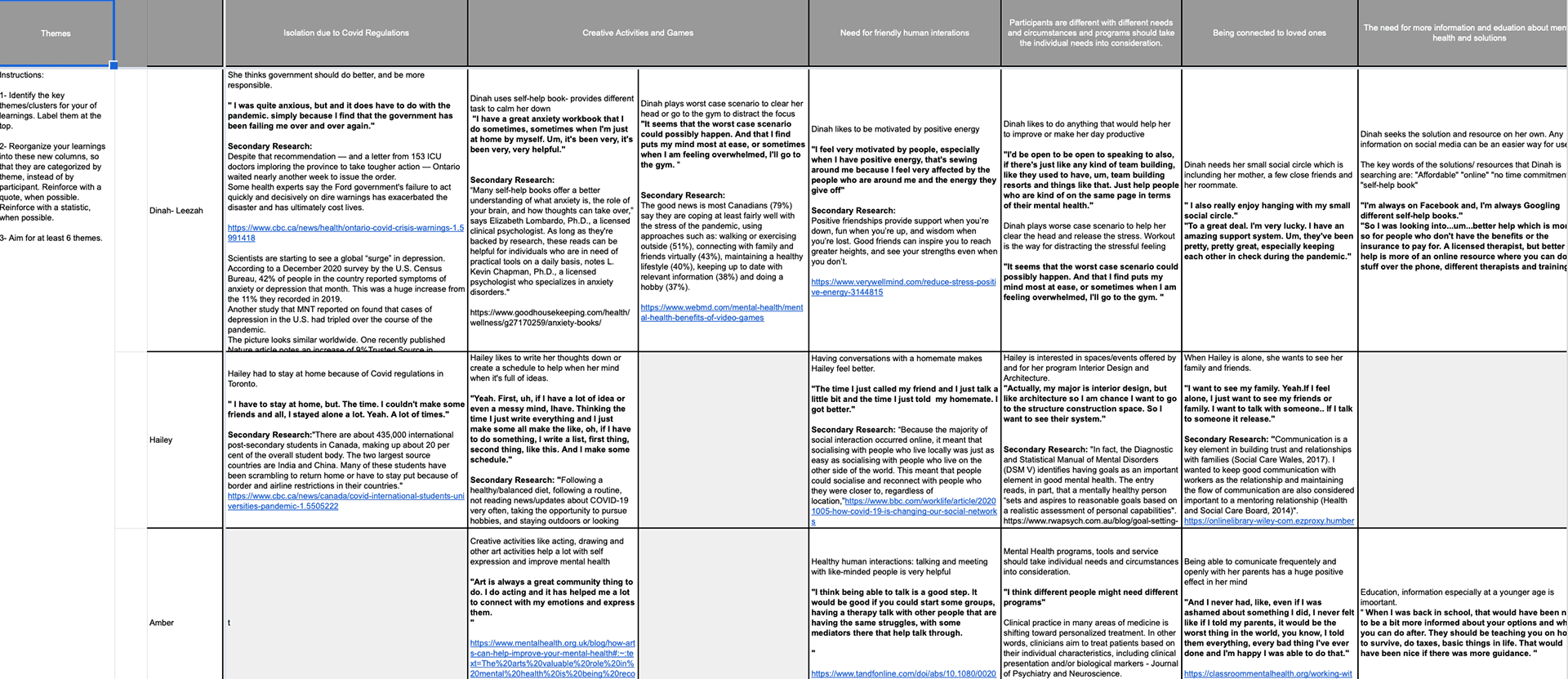
Considering the viability and feasibility according to IAM's situation, our team listed down the constraints in mind:
✖️ Due to IAM's limited budget, they don't want a new application as their solution
✖️ It would be better to have a tool that is easy for the adaptation and training.
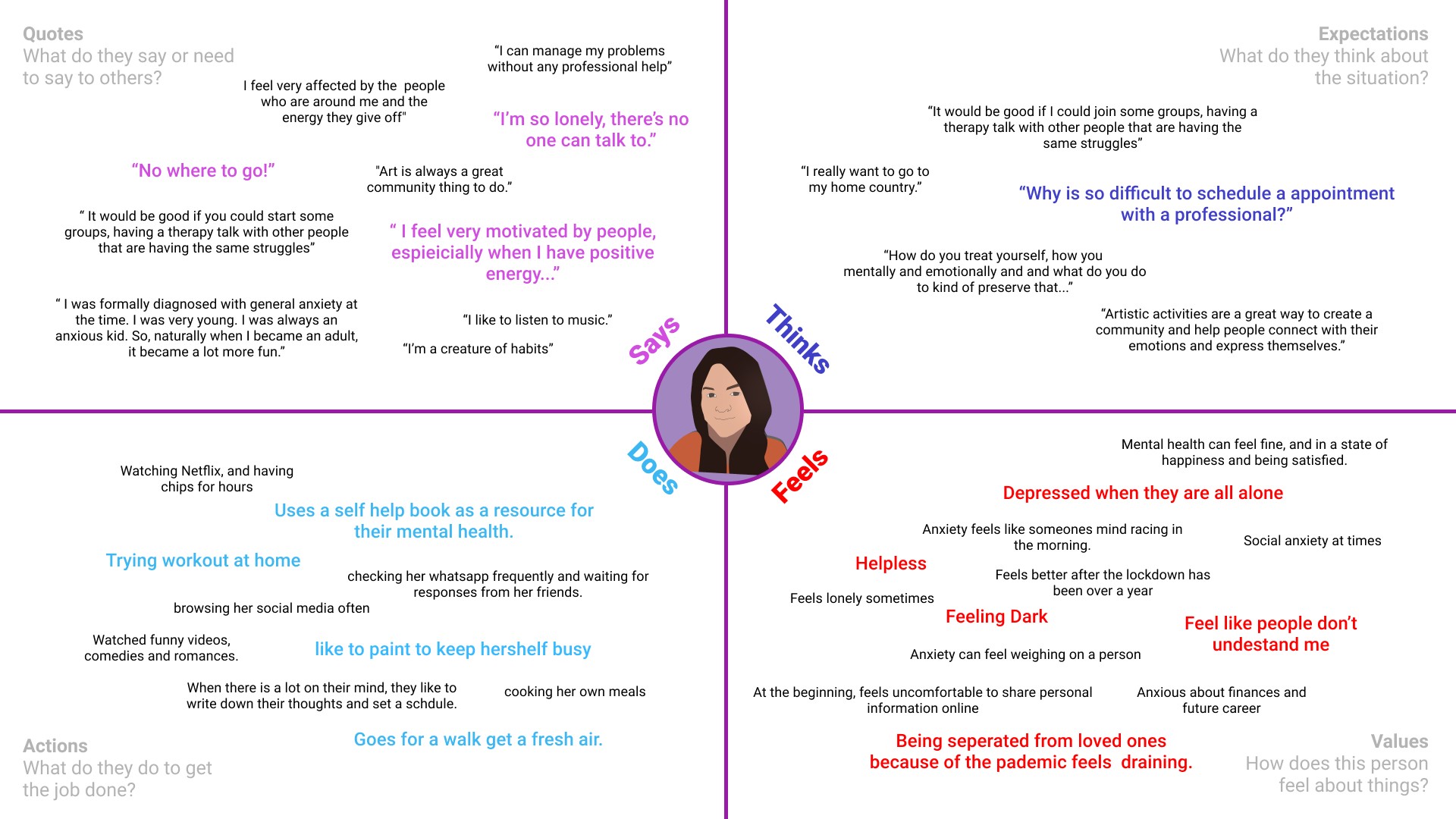
Empathy Map
We used an empathy map to include main insights and observations from our target audiences. Through this diagram, we had an in-depth understanding of their behaviours and emotions on their mental health.
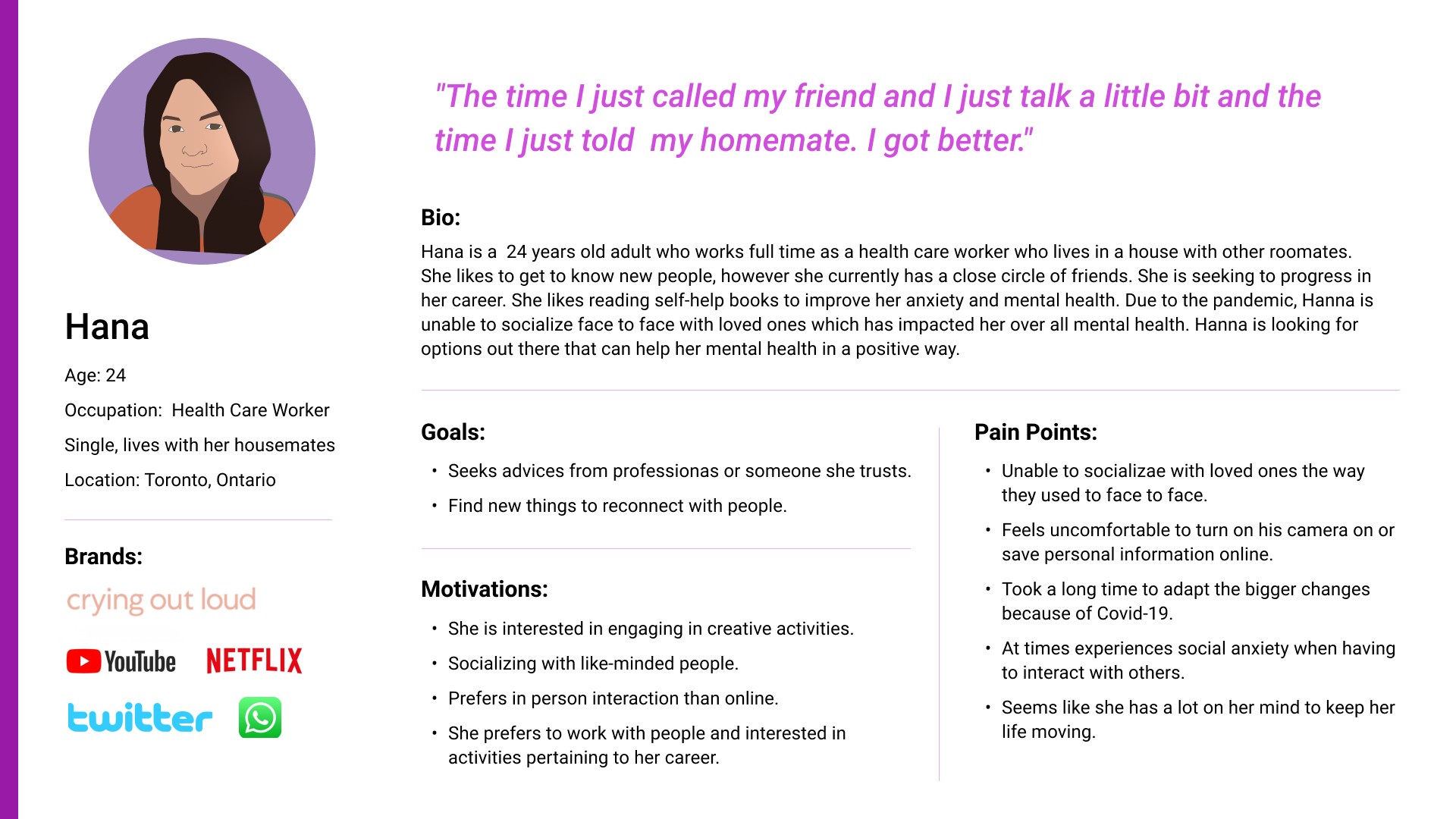
Persona
With all the findings in mind, we delivered a persona to address and demonstrate our target audience's demographics, stories, needs, pain points, etc.
User Insight
Young individuals are looking for a way that can interact with their friends or family virtually to help them release their feeling of isolation and loneliness because of city lockdown during the pandemic.
Design Sprint
For the next step: brainstorm diverse ideas. We developed five design solutions for this project that we felt best addressed the pain points identified from the research. In addition to these recommendations to IAM, we scaled our ideas from top1- 5. Eventually, IAM chose the one that our team thought would be the best solution for them.
Design Solution
Young individuals have a strong desire to recover their mental health that is affected by COVID-19 city lockdown because they want to find their happiness back in pre-pandemic sooner.
Blueprints
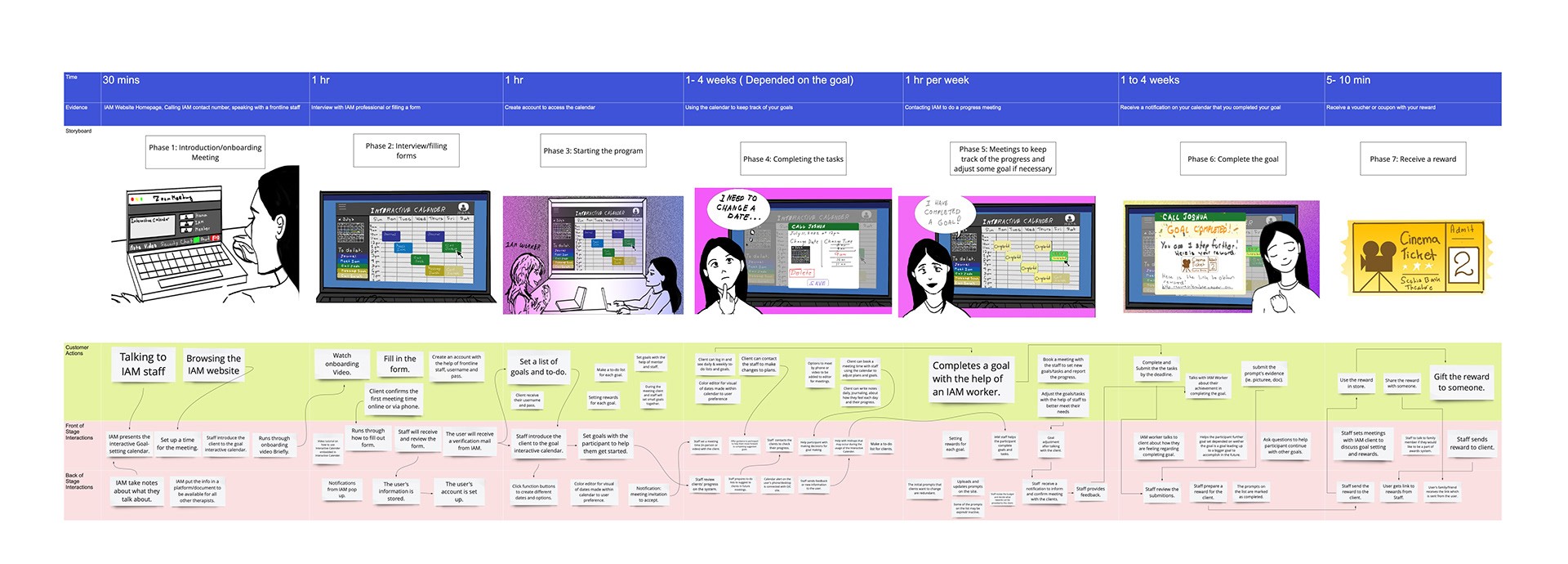
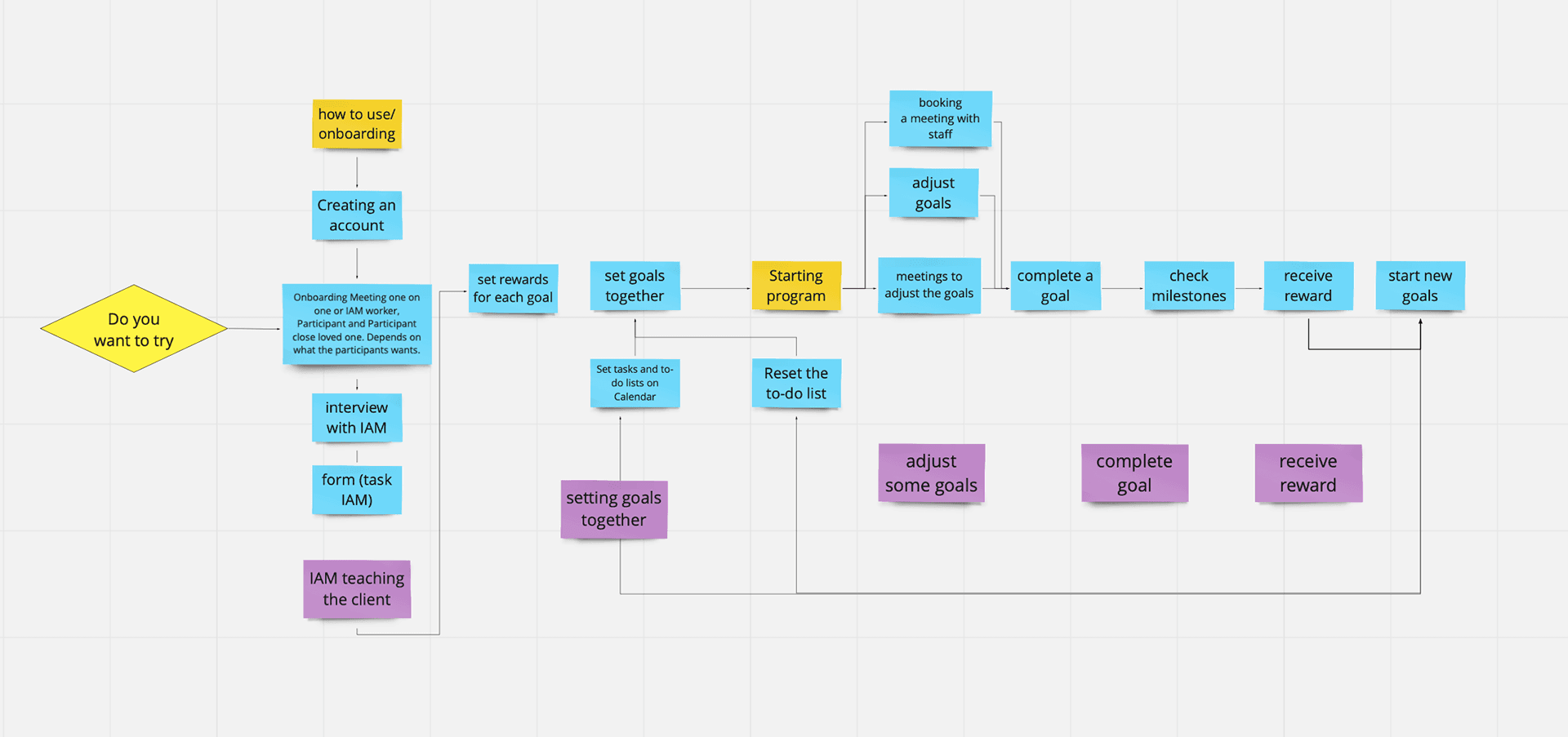
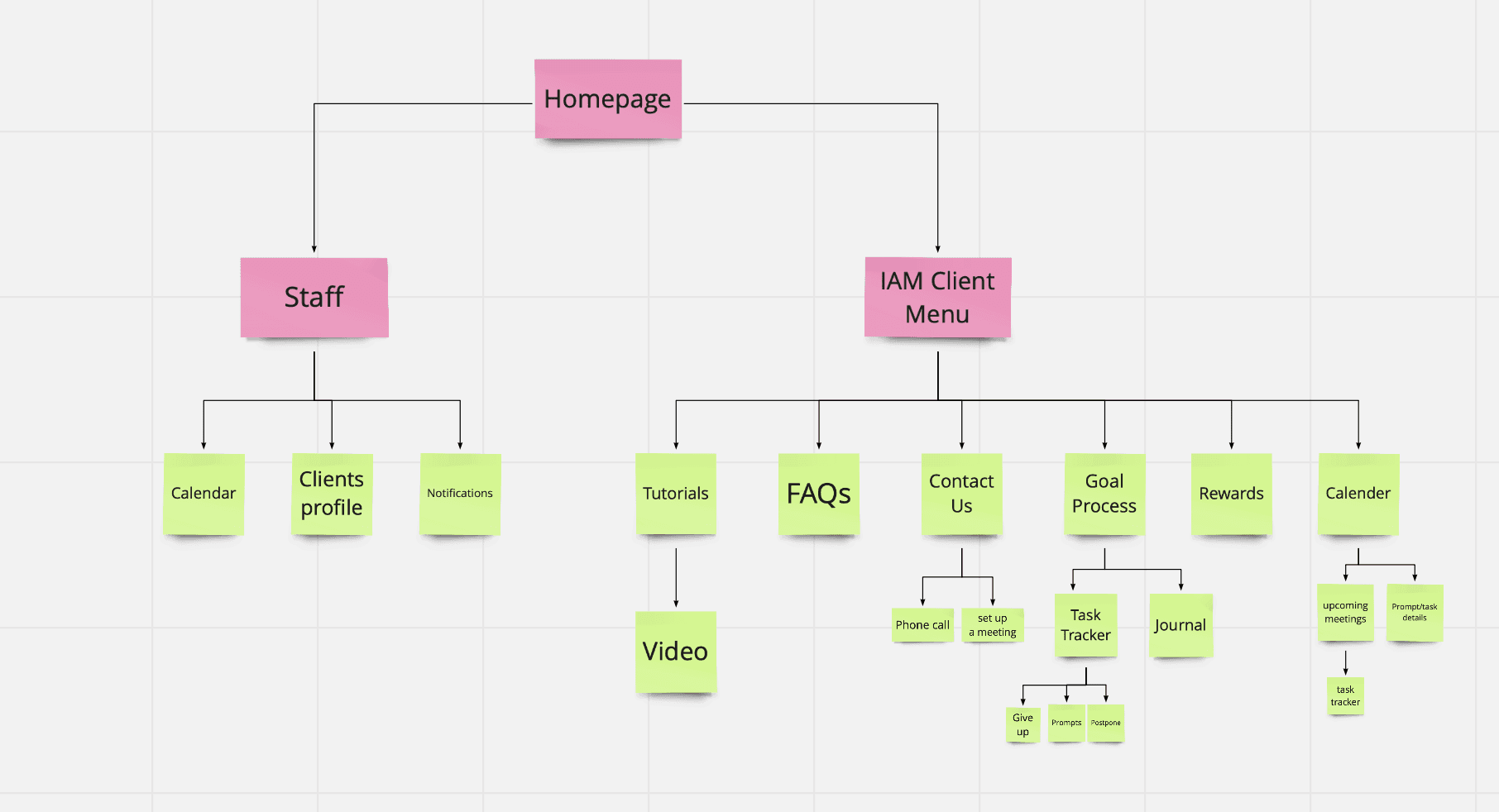
Firstly, we created a flow through blueprints in order to clarify each stage of the process for the interactive calendar. At the meanwhile, we also generated a task flow and information architecture in order to ensure each feature is valid to the website.
Sketching
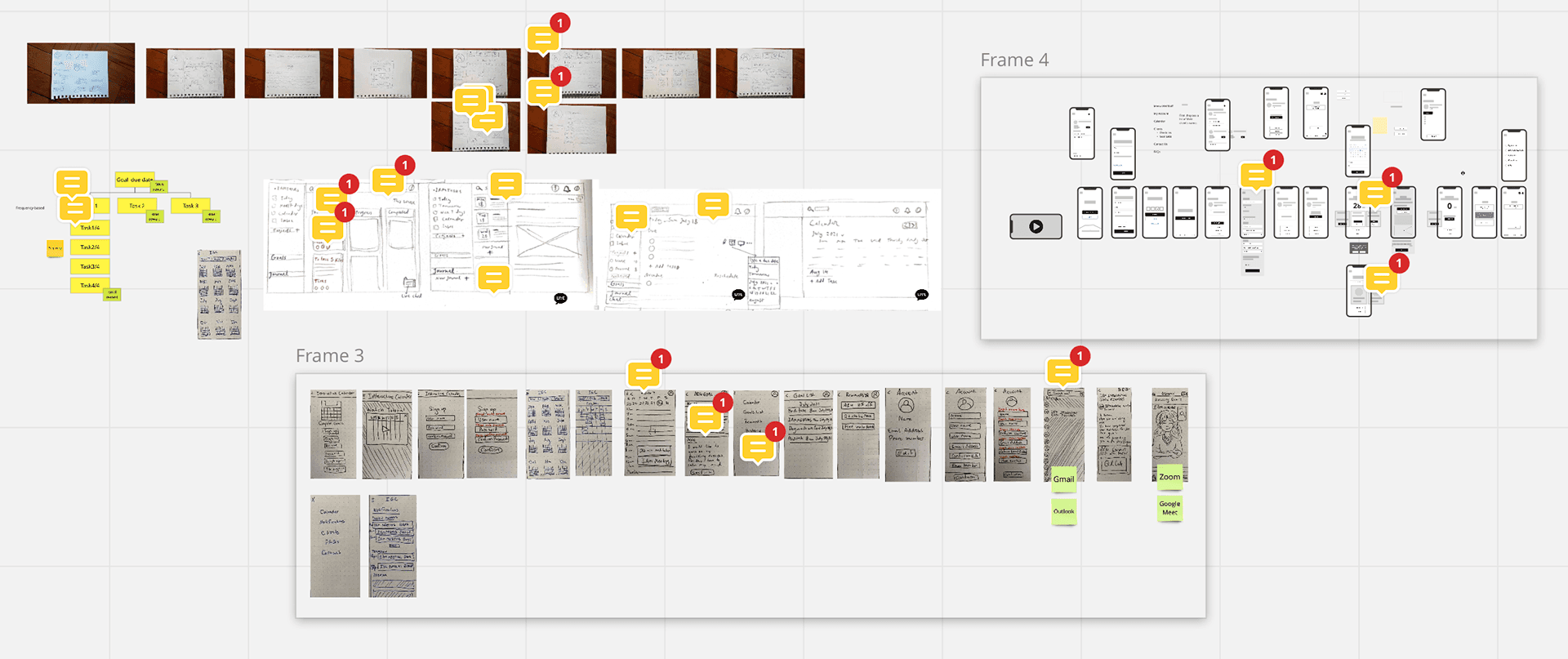
In this fun part, each team mate in our team built up their own idea creatively and we shared together in order to combine ours into one concisely.
Here's our jam below:
User Flow
This would demonstrate the initial process that the IAM clients set up their goal and complete it according to our steps. Moreover, we used this flow for our concept testing with three participants.
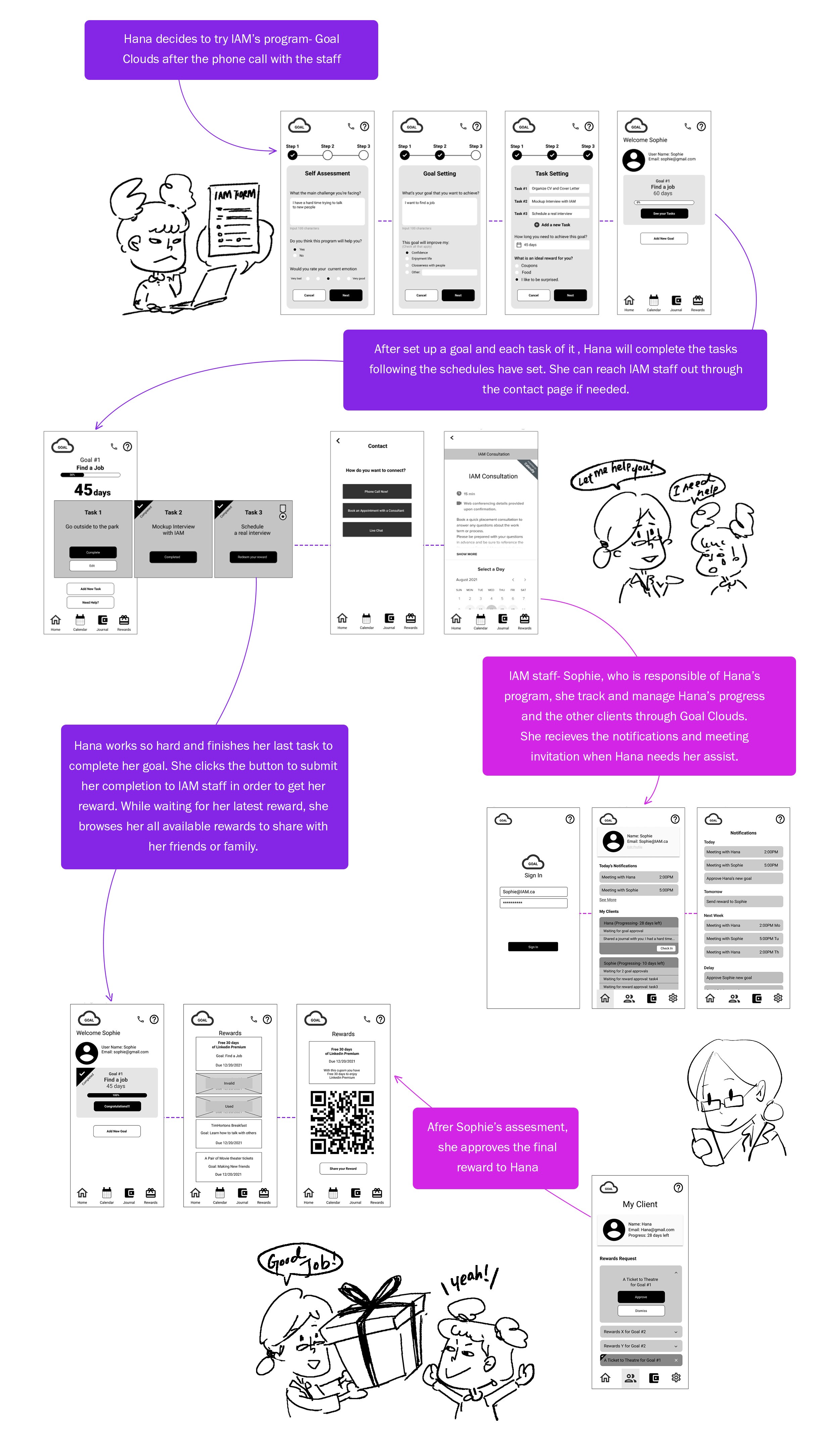
Concept Testing
Young individuals are looking for less features to not be lost on the website because they want to proceed their steps easily and quickly to complete their assigned tasks. Additionally, IAM staff are aware of using terms carefully to their clients because the clients are sensitive and may take personally with the unsuitable wording.
Usability Testing
To validate our features, process, and other aspects of this website are feasible to our end-users. We looked for three participants including two young individuals and one IAM staff. Moreover, the main features we want to validate were goal setting process, browsing clients' profiles and redeeming rewards.
The intent of this testing are following:
➕ Success rate
➕ The error indications
➕ User's subjective satisfaction
Key takeaways from the feedback:
➕Icons lead to Go To: When using Icons, it should be used for quick navigation. At the time of the second task: Claim your reward, one of the participants went straight to the Rewards page because of the ‘gift’ icon. However, on the subcategory page, Task Progress is a slider that navigates back and forth where you can claim rewards per task. Furthermore, because the icon was in an easier and navigable spot and read easier, they went straight to the Rewards page excluding the discovery and usage of the slider.
➕Clarity in Visuals: The participant commented when navigating task 4 that it was hard to see the text. The prototype is a mobile screen, but she went through the testing on her desktop. This insight is now going to be considered in refining the design.
➕Importance of the wording: The team has focused on visualizing the majority of the information to create an aesthetic interference; therefore, the wording choices will be a crucial factor to the stakeholders, including IAM staff and clients. From the testing session, the participant mentioned that they don’t push or force their clients to implement tasks, which is not the style of IAM. In this case, “approve” might be sound critical and strict to both IAM clients and staff.
What I learned
Through this project, I learned the vital values of prioritizing the functions and iterating process for evolution to a better product.
✔️ As a team, we were able to fine-tune this information to enhance the insights in an organized fashion. We also were able to take away any insights that were too discombobulated to present precisely the research and ideas to the IAM clients.
✔️ I learned that prioritizing the main functions before the design sprint was important. This would help the team to focus on the main features instead of input everything all around.
✔️ The content of this website would play an important role in this case because IAM wanted to keep their volume lower as encouraging their clients not commanding.