BMO – Interactive Assistant Concept
Year
2021
Role
UX Designer
Timeline
3 weeks
Methods
Secondary Research, Interview, Task/User Flow, Sketching,
Tools
Miro, Invision
Project Overview
We designed a new feature for BMO banking app- ‘Interactive Assistance’. This will provide the user a virtual assistant to help with their banking needs similar to a teller at a branch. The assistant will guide the users and educate them on how to perform the desired interactions. We believe that this will provide the user with the knowledge necessary to build trust and confidence with mobile banking.
My Role
I worked on this whole project as UX designer with my peers at Humber College. In this project, I conducted one of the interview sessions individually, analyzed the data and helped to keep the sketches in consistency.
Problem Statement
"Seniors are struggling on their learning curve on financial tasks on their banking apps or websites in the pandemic because of the COVID-19 regulations and longer waiting in the line at the branch."
Design Process
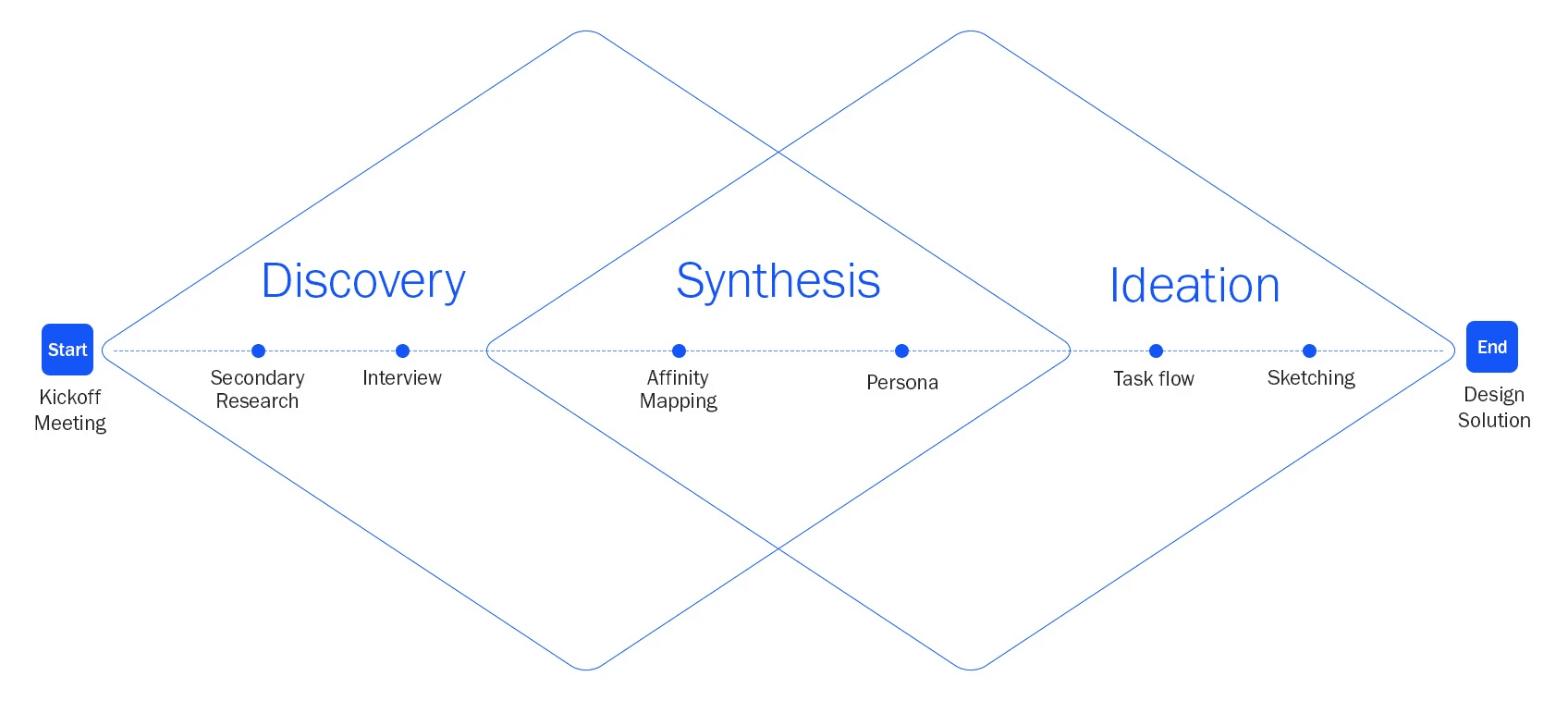
Interview
To understand seniors' current journeys, we looked for four users who are 60 years or older who use different ways to access their banking experience. Our team then generated a semi-structured discussion guide for their interview. The discussion guide focused on the users’ experience with banks: physical, web and mobile.
The intent of the interviews were to determine the following:
➕ Tasks performed through each access method
➕ Overall experience and pain points associated
➕ Which tasks users requested assistance
➕ Extent of technological literacy
➕ Rationale as to why one method was selected over another
Key Findings
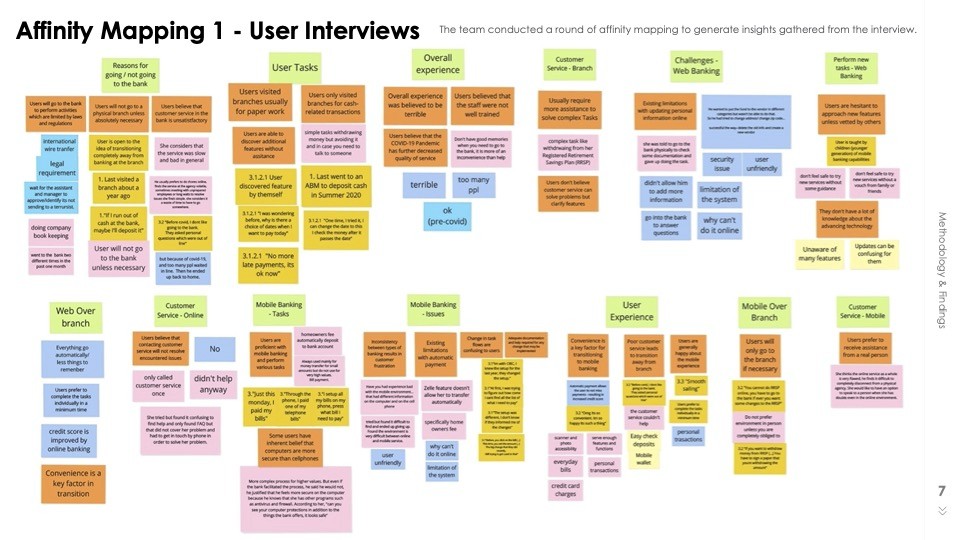
We analyzed our collected data for three rounds of affinity mapping. Firstly, we gathered the insights from each questions from the interview sessions.
100%
willing to learn new
tasks and enjoy the convenience
50%
rely on family members and friends to understand new features
75%
are tech savvy but insecure
75%
prefer mobile banking over than the physical branch
NONE
had confidence and trust in Customer Assistance
Additionally, with the secondary research supporting these findings are included:
➕ Banks are competing with other sectors/ technology to meet user
➕ In-Person is a foundation to build trust with customers
➕ User are willing and open to the idea of moving everything online because of its convenience
➕ Financial institutions have built rapport and trust with our users
➕ Most seniors are undergoing cognitive decline. We must consider accessibility of the applications
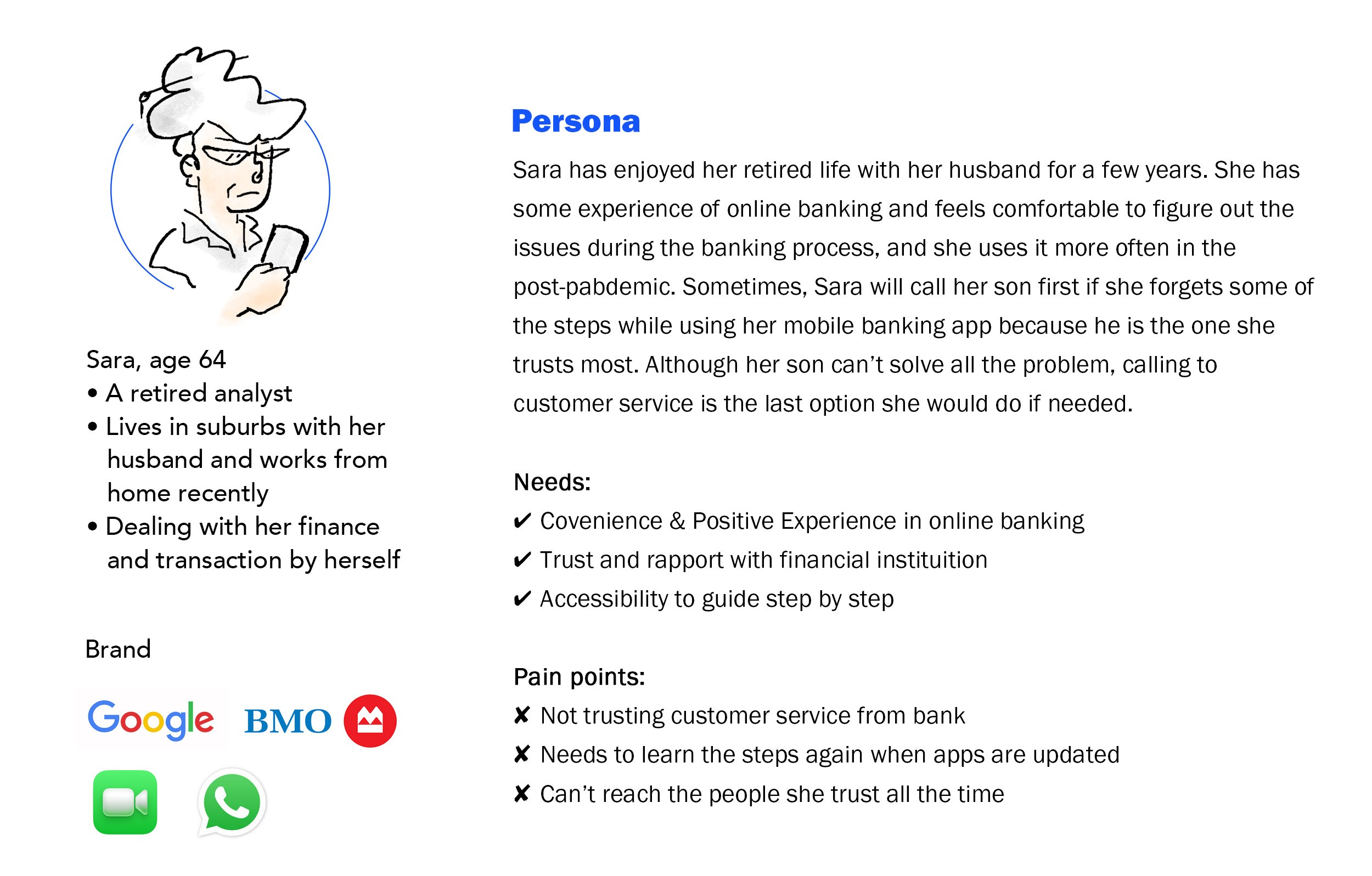
Persona
With all the findings in mind, we delivered a persona to address and demonstrate our target audience's demographics, stories, needs, pain points, etc.
User Insight
"Seniors are looking for new convenient and easy-to-use features with trustful guidance on online banking because they enjoy the convenience and happiness that technology brings to their life."
Design Sprint
For the next step: brainstorm diverse ideas. We developed a design solution for this project that we felt best addressed the pain points identified from the research. According to this solution, each team member sketched their own idea individually. Eventually, we combined and refined our ideas into one.
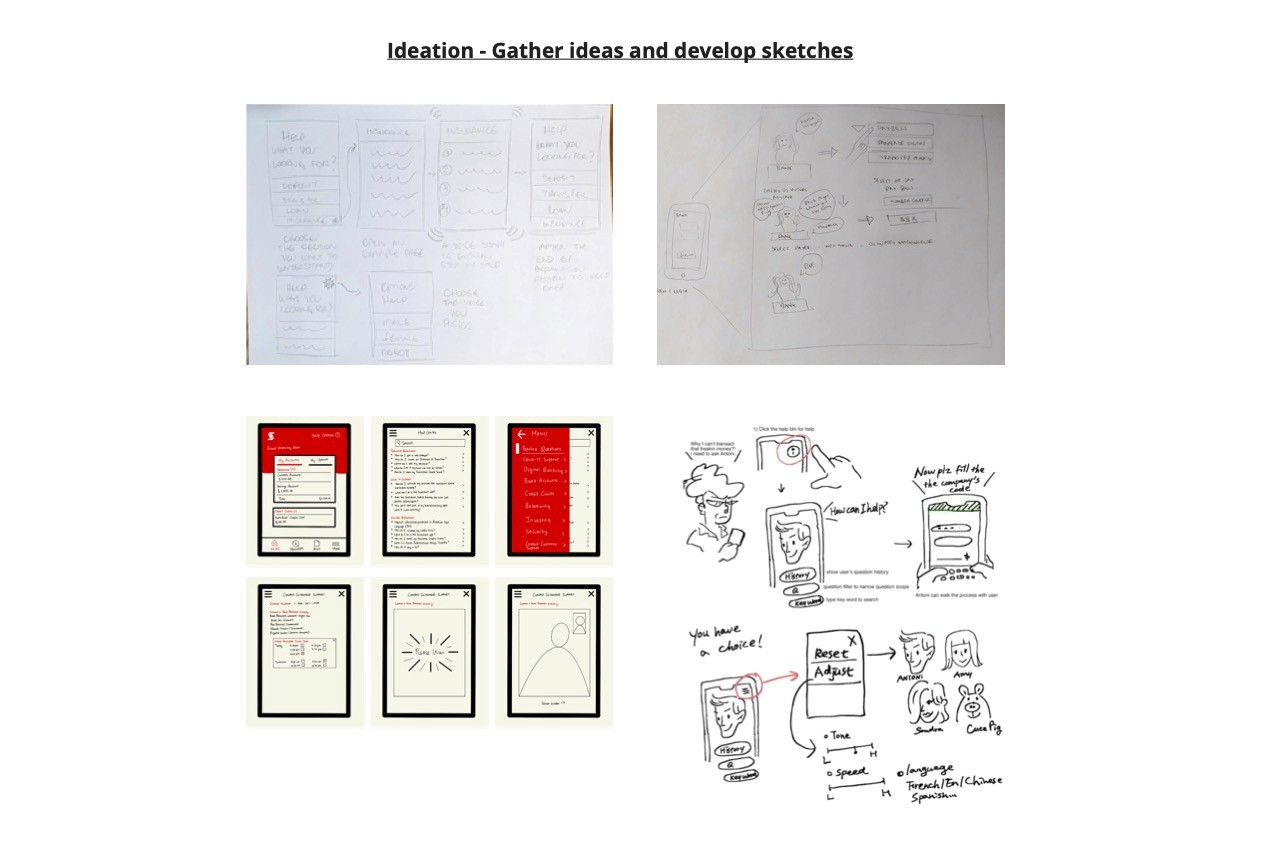
Interactive Assistance – Digital Customer Walkthrough
Seniors have a problem to trust customers service because it is not easy for them to understand from the call or context. Our solution should be deliver a process to walk them through the process step by step. This new functionality in this BMO app is a virtual assistant (similar to teller at branch) to assist with mobile application activities selected by the user.
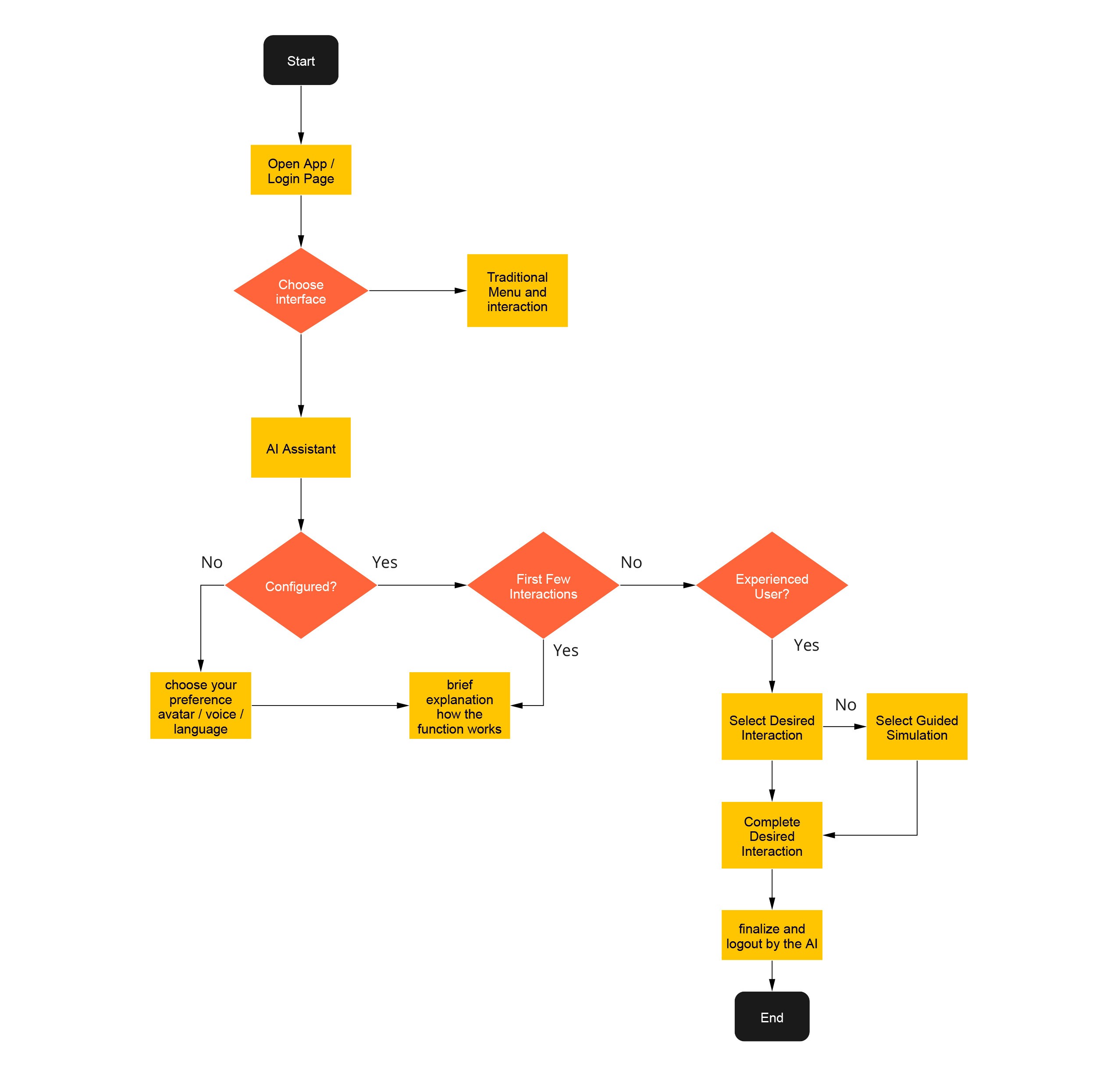
Task Flow
The task flow was conducted to understand how a user would complete tasks to achieve their goals. This was done to ensure that the feature is designed efficiently and logically. Sketches (Low-fidelity wireframes) were derived from the task flow.
User Flow
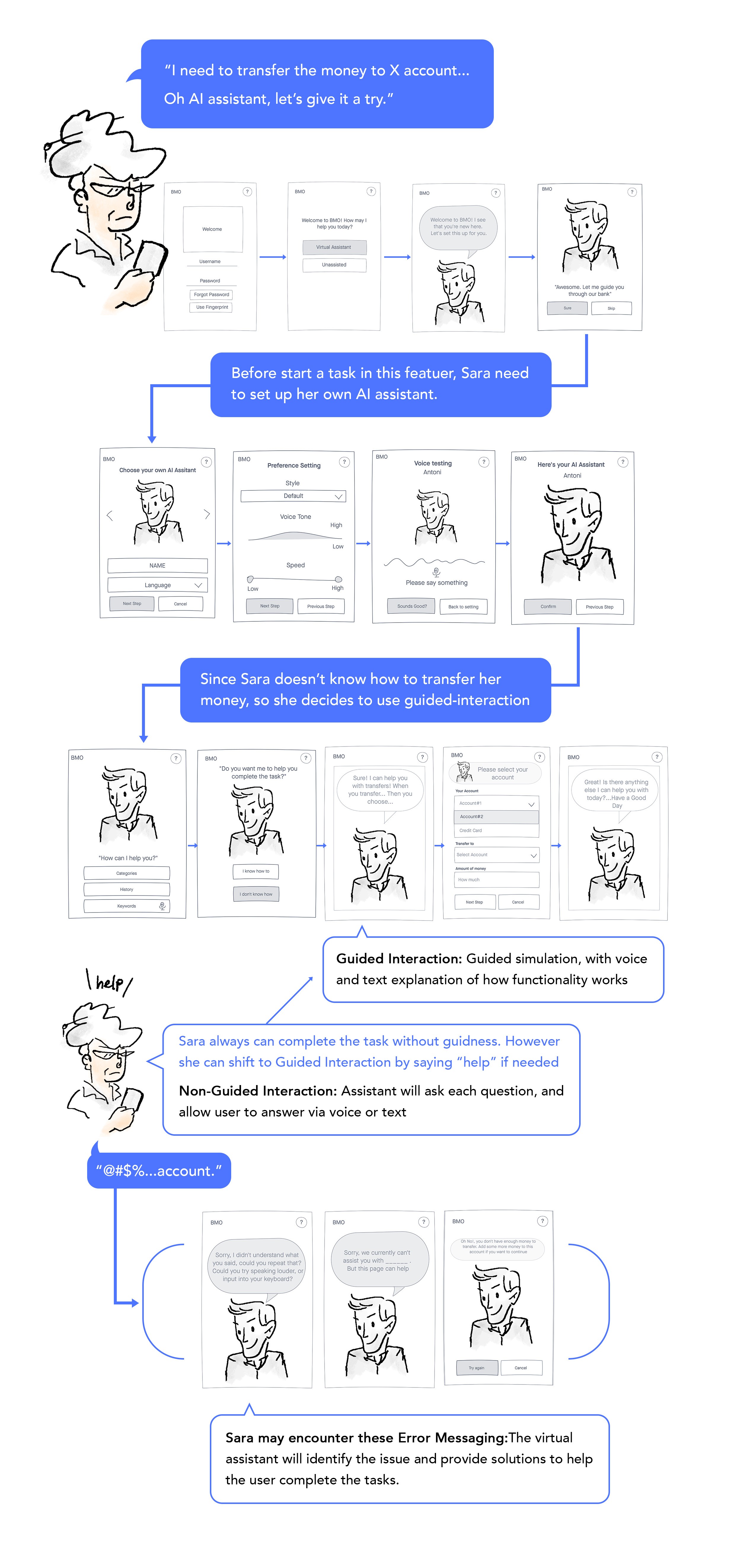
We set up a series of scenarios, which include setup virtual assistant, guided interaction, non-guided interaction, etc., for demonstrating our sketches and features of this project.
Sara is a new user to Interactive Assistant that she intends to transfer the money to her other bank. Through the guided-interaction by her personalized AI assistant, Sara can complete and learn the task at the same time.
Here's her experience below:
Concept Testing
"Seniors feel insecure and not truthful to AI assistant because they are afraid of their privacy being collected from technology. In order to establish trust with seniors, we should deliver a way to demonstrate their privacy is protected."
Guerrilla Testing
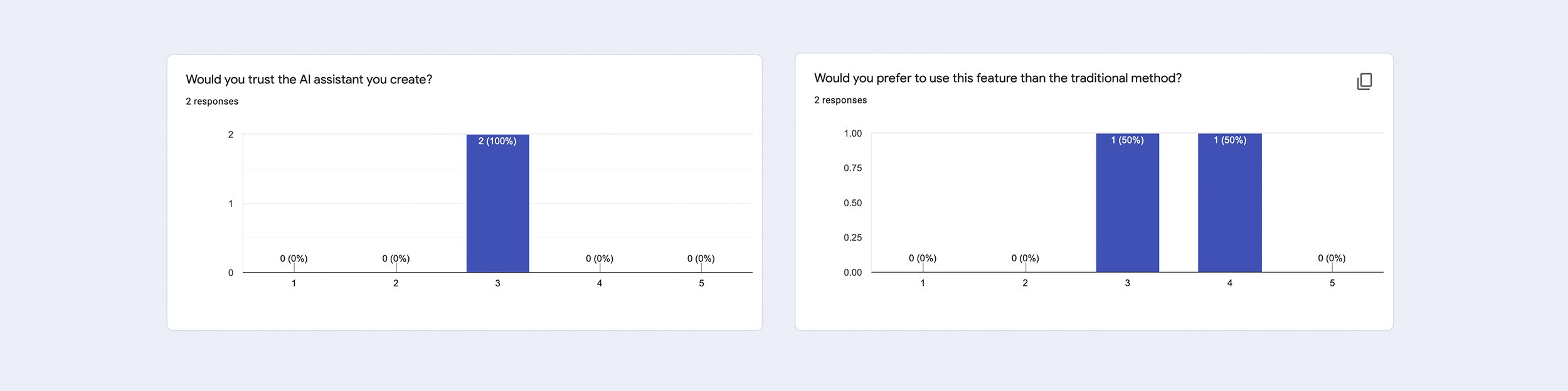
I created a series of questions as usability scale. The purpose of this testing was to have seniors opinions on AI Assistant feature. This concept was tested by two target audiences through guerrilla testing: According to their feedback, they are currently settled with the features of their online banking apps, they don't have a stronger desire for the "Interactive Assistant". However, it will be nice to have if needed.
What I learned
✔️ Through the interview and secondary research from the project, we were able to reach the reality and in order to refine our initial problem statement.
✔️ I learned that a better user experience is not about creating a brand new or changing the whole product. It can be started small step like add a new function as an alternative.
✔️ The importance of iterative refinement and testing in this project. It helped the team to evaluate the feasibility of the concept and collect deeper insight from users.
Our next step is to develop a functioning prototype to begin testing on functionalities proposed during this project; testing early and often will ensure the best quality of the final product.