SoftwareReviews
LIVE 2026 Event Redesign
ROLE
Product Designer
TEAMS
FE developers, Comms & Social Media
TIMELINE
2 months, 2026
TOOLS
Figma, Adobe, Chat GPT
design handoff time across product squads
user engagement compared to LIVE 2025
TASK
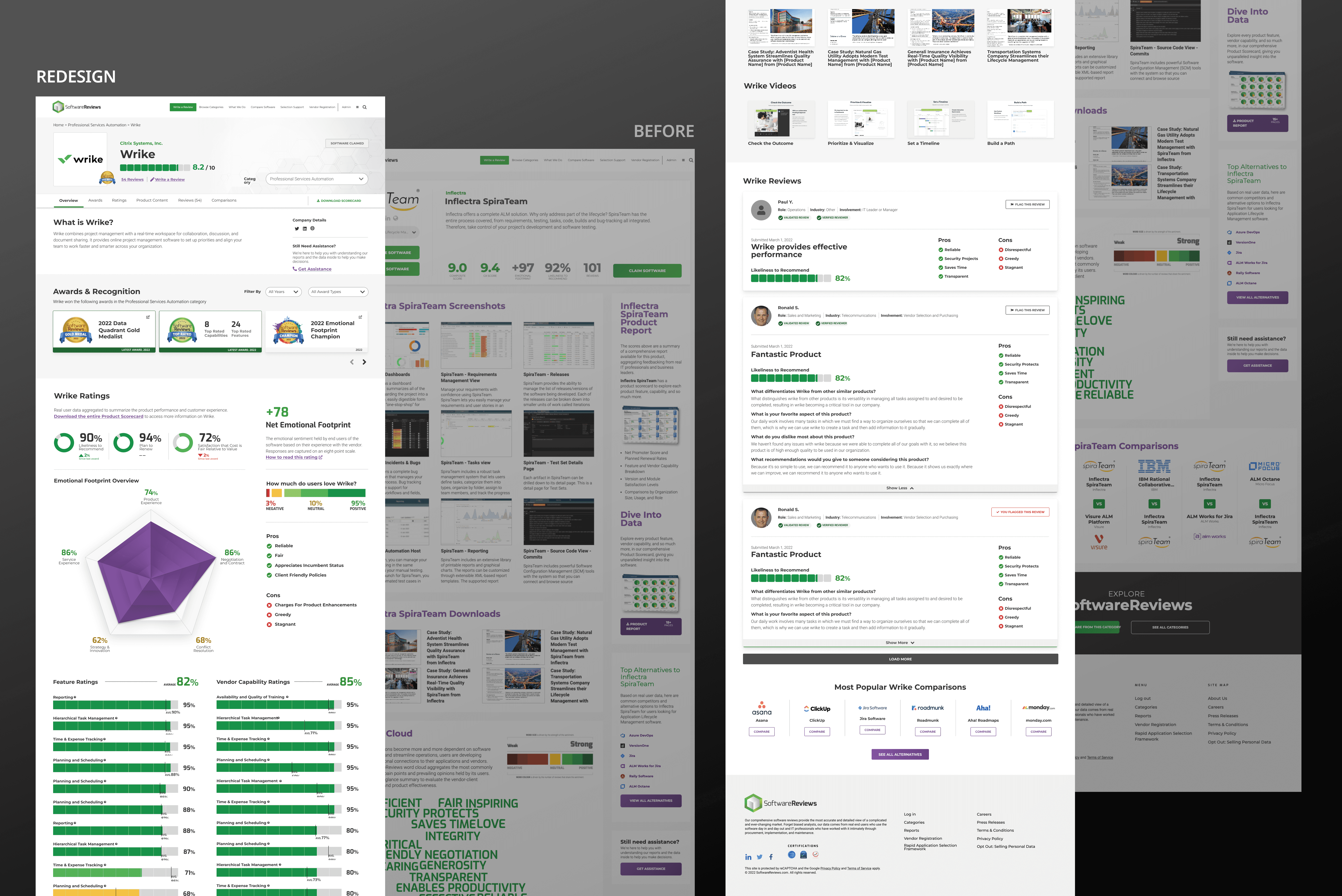
This project focused on redesigning the product page system into a scalable, templated experience that could support all software offerings while improving decision confidence, content clarity, and long-term engagement.
MY ROLE
Led the conference branding guideline and components, reducing design handoff time by 40% across product squads compared to 2025.

Context and Constraints
The LIVE Conference Series is one of ITRG’s largest events. This year, the new theme requires scalable guidelines to ensure consistency across teams.
Inconsistent output: In 2025, every team interpreted the brand on its own, and designers became a bottleneck for each banner, slide and page.
A new, bolder direction: Leadership wanted more colour and play, which raises the risk of contrast and legibility problems.
Many touchpoints, many teams: Product squads, comms and social all needed assets from the same system
Our goal was to optimize the design system to make it scalable, accessible, and production-ready for the LIVE conference series.
Design Process
Stakeholder wireframe: Stakeholders shared a wireframe with the features they wanted to add and the order they expected: simplified header, all awards, data visualization and product reviews.
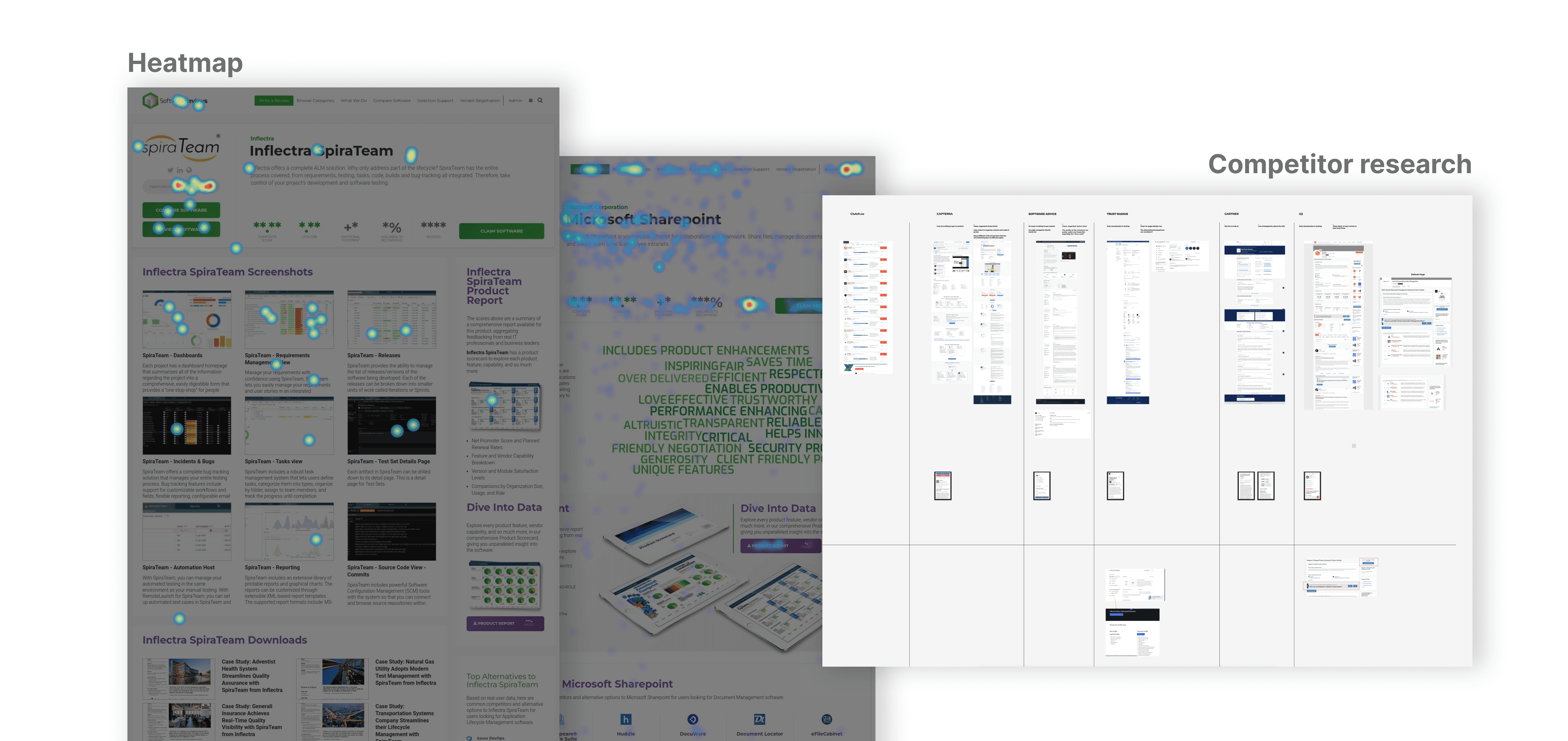
UX review: I compared the wire against our heatmaps and five competitors(Capterra, G2, Software Advice, Trust Radius and Gartner). With the findings gathered, I pointed out the pain points and provided the suggestions to optimize our product page.
Scenario mapping: I revised the wires to combine stakeholder requirements with the UX findings and mapped every state the template would face (rich, sparse or missing data) before any high-fidelity work.
Design Phase: After approval, I designed high-fidelity pages for every scenario using SoftwareReviews brand guidelines, then carried design intent through handoff, QA and launch.

Key Decisions
DECISION 1
Build components first, then campaign assets
What I chose: Components first. Every hero asset was built from the library, so the system was tested on real work from day one.
Tradeoff: The first visible assets arrived. In return, teams could produce on their own once the library was ready.
DECISION 2
Treat training as a deliverable
What I chose: Utilize the time with greater team to share knowledge and guideline as training sessions for product, comms and social and individual session if needed.
Tradeoff: Time spent teaching instead of designing. That time is what removed the dependency on designers and cut production time by 40%.
Outcome
-40%
design handoff time across product squads
production time for comms and social teams
user engagement compared to LIVE 2025
registrations compared to 2025
Reflection
The 40% came from removing a dependency, not from designing faster. Once teams could self-serve, designers stopped being the bottleneck.